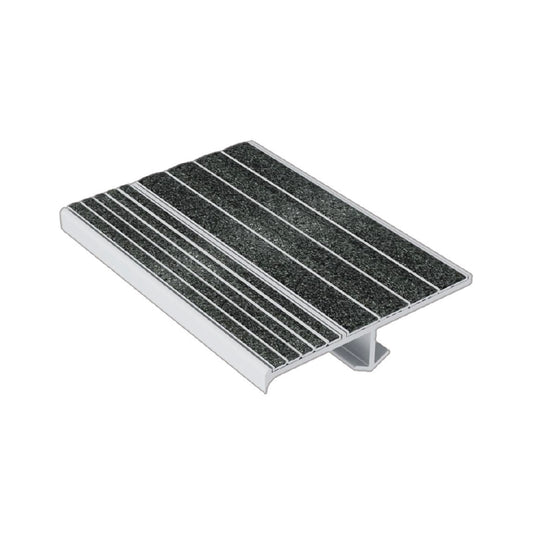
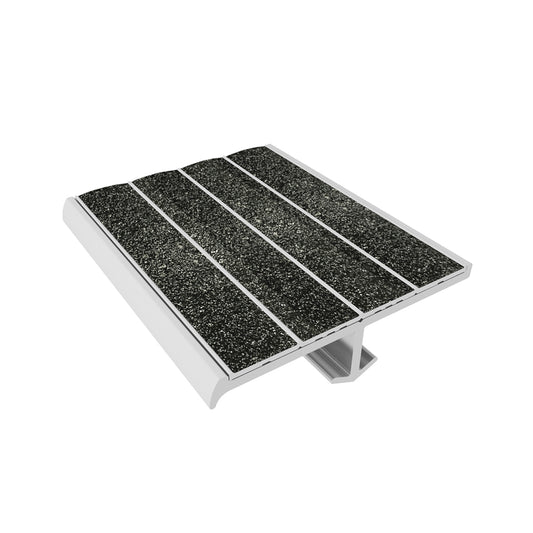
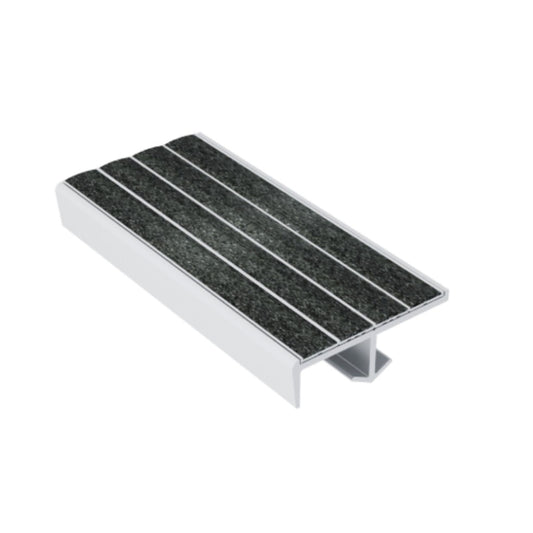
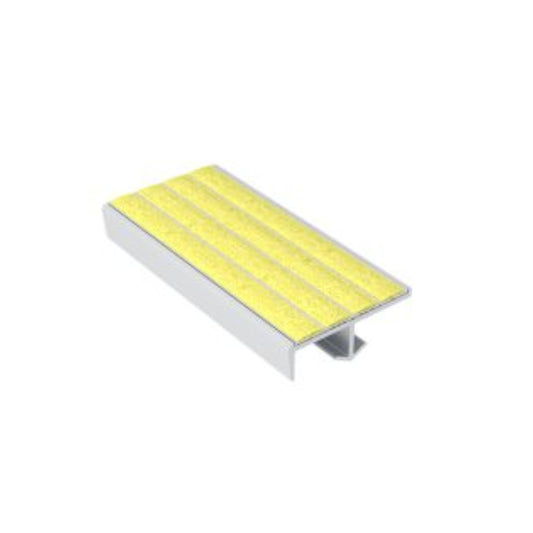
What is a non-slip cast-in-place stair nosing?
A non-slip cast-in-place stair nosing is an aluminum stair-edge
profile designed to be installed directly into wet concrete.
Ecoglo® combines the structural profile with an integrally bonded
anti-slip surface to create a clean, durable leading edge with
improved traction and visible color contrast.
Which Ecoglo® non-slip cast-in-place stair nosings are available?
Ecoglo®'s current manufacturer range includes
S10-N30, S2-N30, S3-N, S3B-N and S4-N30.
The current ComposiGrip non-slip cast-in-place range includes
S10-N30, S2-N30, S3-N and S4-N30 product listings.
What is the difference between S10-N30, S2-N30, S3-N and S4-N30?
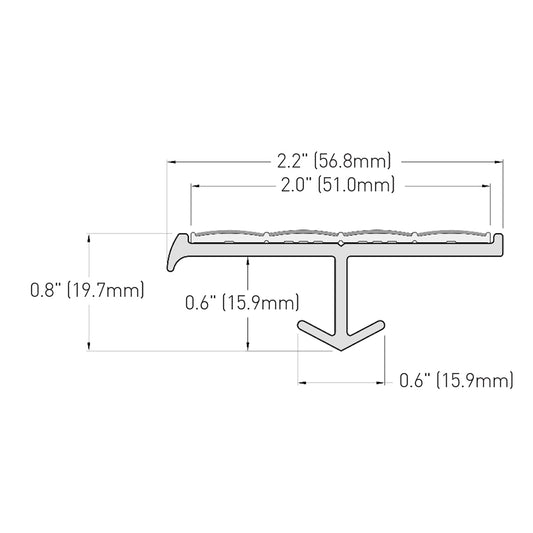
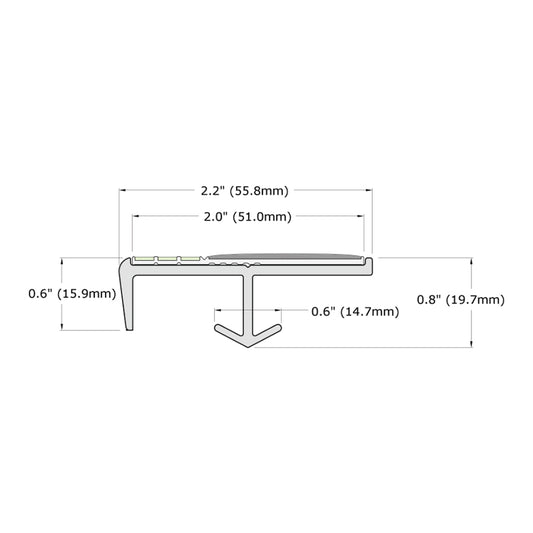
Their widths and profile geometries differ.
S10-N30 is approximately 2.1 inches wide,
S2-N30 and S4-N30 are approximately 2.2 inches wide,
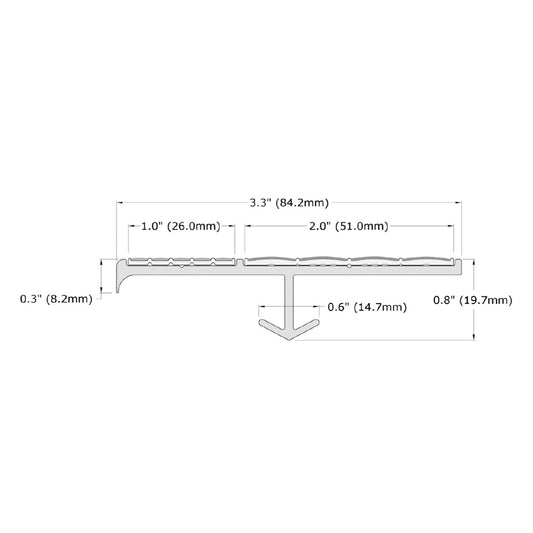
and S3-N is approximately 3.3 inches wide.
The correct model should be selected from the approved stair
detail rather than by width alone.
Can cast-in-place stair nosing be installed in wet concrete?
Yes. Direct installation into wet concrete is the defining
installation method for Ecoglo® cast-in-place stair nosings.
They are designed for concrete stairs, concrete-filled steel-pan
stairs and precast concrete stair construction.
Can Ecoglo® cast-in-place nosings be used on concrete-filled steel-pan stairs?
Yes. Current Ecoglo® and ComposiGrip product information
identifies concrete-filled steel-pan stairs as a standard
cast-in-place application, along with conventional concrete
and precast concrete stairs.
Can they be used on precast concrete stairs?
Yes. Ecoglo® identifies precast concrete stairs as a suitable
application for multiple cast-in-place S-Series profiles.
Coordinate the nosing with the precast manufacturer and approved
shop drawings before fabrication.
What colors are available?
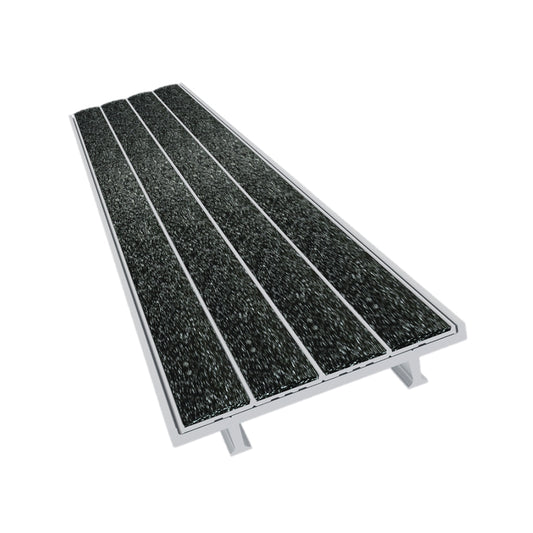
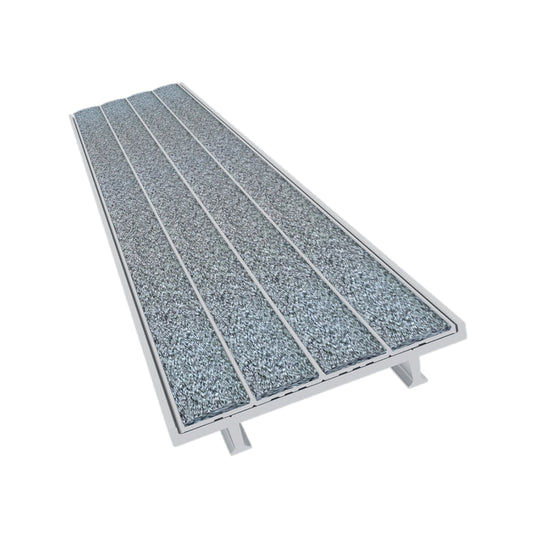
S10-N30, S2-N30 and S4-N30 are currently offered through
ComposiGrip with black, gray and yellow anti-slip options.
The current S3-N listing uses a black non-slip insert.
Are Ecoglo® cast-in-place stair nosings slip resistant?
Yes. The non-slip S-Series uses hard-wearing silicon-carbide
material bonded to the aluminum profile. Current product
information describes these surfaces as designed for long-term
traction under heavy pedestrian traffic.
Can non-slip cast-in-place stair nosings be used outdoors?
Yes. Ecoglo® describes the non-slip cast-in-place range as
suitable for long-term indoor and outdoor installations and
emphasizes resistance to intense UV weathering. Current
ComposiGrip product information also references salt-spray,
freeze-thaw and washability testing on several S-Series products.
What lengths are available?
Several current S-Series products list 8 ft and 10 ft as
standard manufacturer lengths, with cut-to-length options
available at approximately ±1/8-inch tolerance. ComposiGrip
currently offers 2 ft, 4 ft, 6 ft, 8 ft and 10 ft purchase
options on several cast-in-place listings.
Can the non-slip insert be supplied unattached?
Yes. Current S-Series product information states that inserts
can be supplied attached or unattached. An unattached insert
can be installed later in the construction sequence to help keep
the traction surface clean and reduce the risk of damage.
How much do the different cast-in-place nosings weigh?
Current product information lists approximate profile weights
of 0.328 lb/ft for S10-N30,
0.516 lb/ft for S2-N30,
0.625 lb/ft for S3-N, and
0.494 lb/ft for S4-N30.
Are these cast-in-place stair nosings photoluminescent?
No. The N-Series cast-in-place products on this collection are
non-photoluminescent. They provide anti-slip traction, stair-edge
protection and daytime color contrast. For luminous egress
requirements, choose an appropriate Ecoglo® photoluminescent
cast-in-place stair nosing.
Browse All Ecoglo® Cast-In-Place Nosings →
Which cast-in-place nosing is widest?
Of the current ComposiGrip non-slip cast-in-place products,
S3-N is the widest at approximately 3.3 inches.
S10-N30 is approximately 2.1 inches wide, while S2-N30 and
S4-N30 are approximately 2.2 inches wide.
When should cast-in-place stair nosing be selected on a construction project?
Ideally during design development or the product-submittal stage,
before the stair is poured. Early selection allows the architect,
concrete contractor, stair fabricator and general contractor to
coordinate profile geometry, color, lengths, stair-edge placement
and installation details before concrete placement.